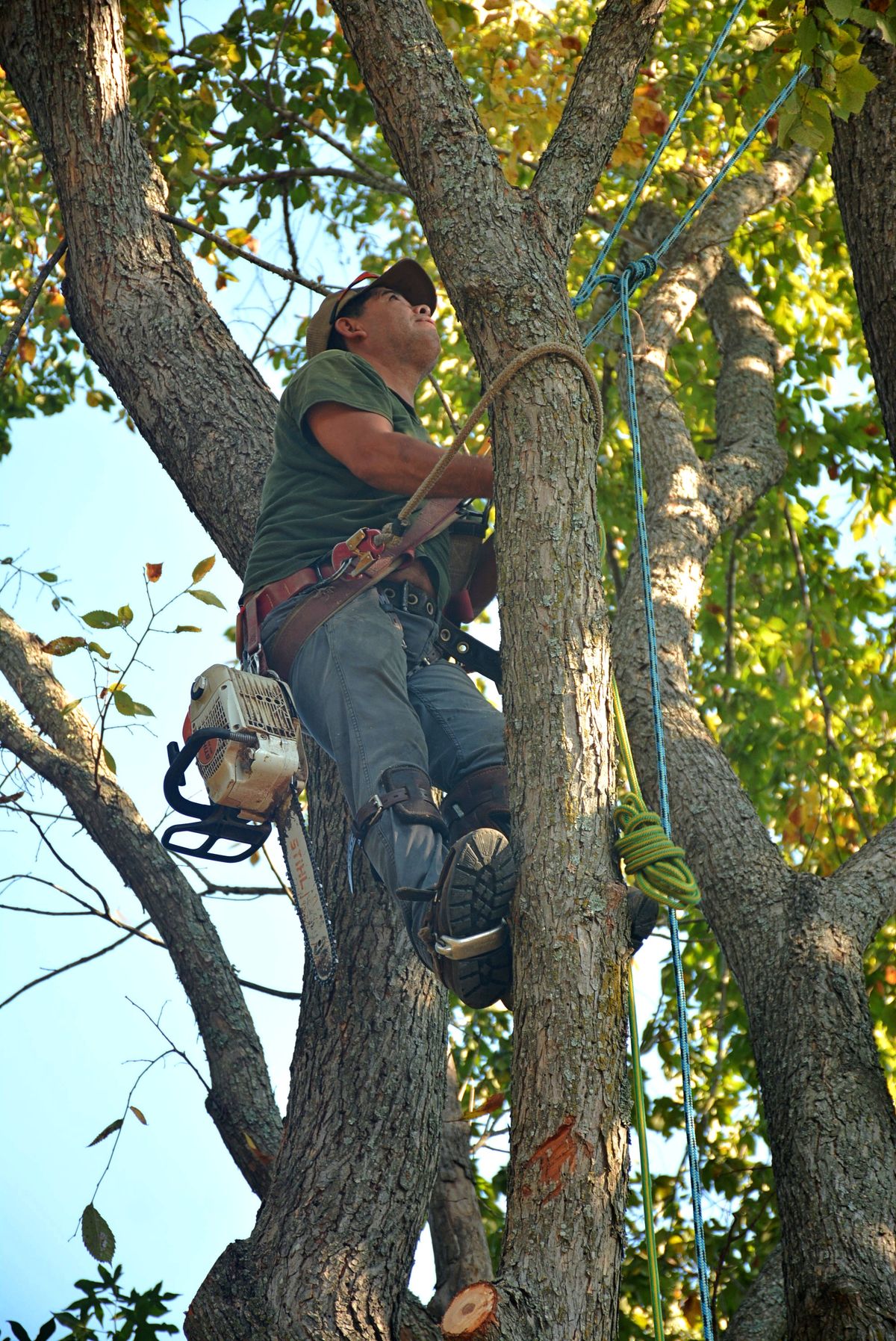
Crown thinning, dead wood removal, and clearance work β done to standard, not topped.
Tree trimming in Miramar, FL keeps a canopy healthy, open to wind, and clear of your roof β and done correctly it is the single best protection a South Florida tree has against hurricane season. We are licensed and insured for tree work in Broward County, we thin canopies rather than top them, and we never remove more of a living crown than the tree can afford to lose. Call (954) 740-6174 for a free on-site assessment.
Updated August 2026
Trimming is selective. A crew works through the canopy removing specific limbs for a specific reason β dead wood, crossing branches rubbing bark off each other, growth crowding a roof or driveway, or a canopy so dense that wind can't pass through it.
There are three cuts that matter in South Florida. Crown cleaning takes out dead, dying, and diseased wood. Crown thinning opens the interior so wind moves through instead of pushing against a solid wall of leaves. Crown raising lifts the lower limbs off your roof, fence, or the sidewalk.
What we don't do is top trees. Cutting a canopy flat across the top is the fastest way to kill a mature tree and the surest way to make it dangerous. Topped trees respond with weak, fast vertical shoots that snap in the first real storm.
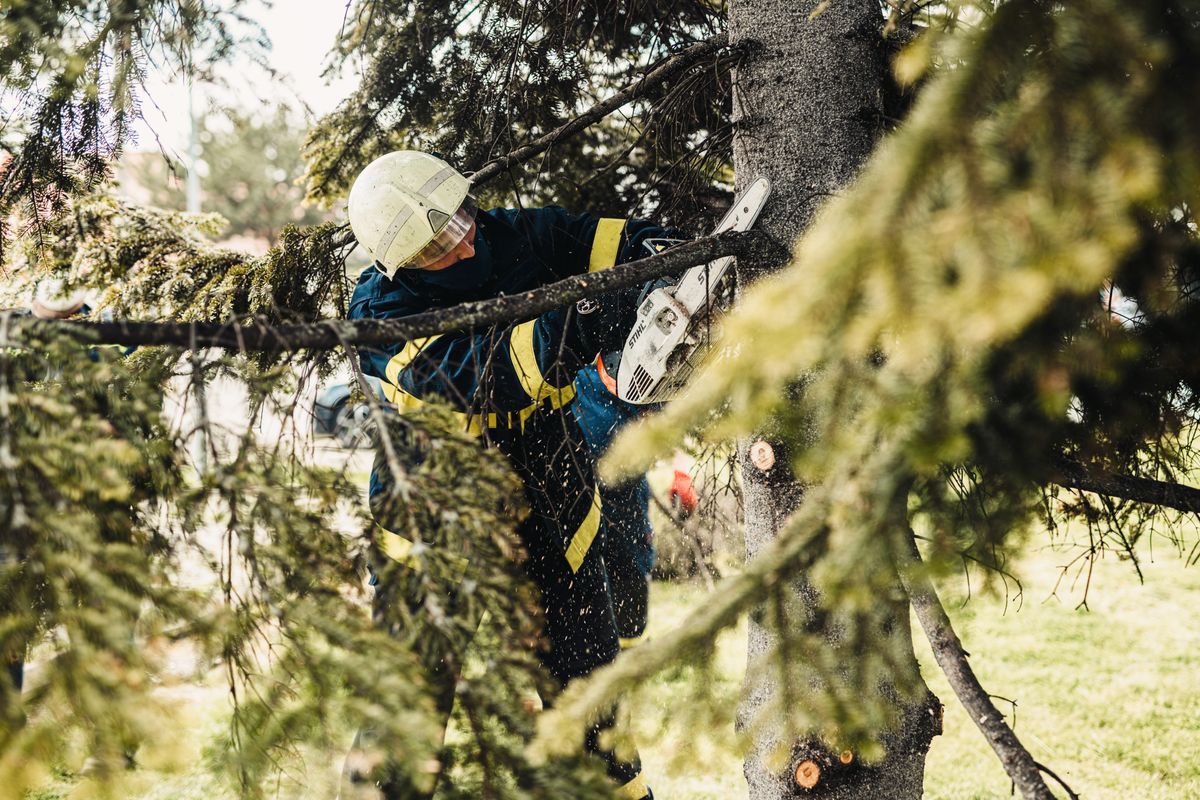
Most trees here need attention every two to three years. These are the situations that move it up the list.
Limbs resting on shingles wear through them and give rodents and roof rats a bridge into your attic. Broward homes see this constantly with oaks and ficus.
A solid canopy catches wind like a sail. Thinning lets gusts pass through, which is the single biggest thing you can do to keep a tree standing through a storm.
South Florida humidity breaks down dead limbs fast. Gray, brittle branches with no leaves will come down β the only question is whether it happens on your schedule or the weather's.
Anything approaching a service drop is a fire and outage risk. FPL handles primary lines, but the drop from the pole to your house is generally the homeowner's responsibility.
Miramar code requires clearance over public walkways. Low limbs over a sidewalk are a liability if someone walks into one.
A canopy so thick that grass dies beneath it is a canopy that needs thinning. Filtered light through a properly thinned tree lets a lawn survive.
Late winter through early spring β roughly February into April β is the window most arborists here prefer. The tree is growing slowly, wounds close cleanly, and you're well ahead of hurricane season.
The practical version: get structural trimming done before June 1. Once storms start rolling through, every tree company in Broward is booked and prices reflect it. Homeowners who call in late August are competing with everyone else who waited.
Dead wood is the exception. Dead limbs come out any time of year, because a dead branch isn't going to get healthier and it isn't going to wait for a convenient season to fall.
This is the part homeowners rarely hear before they've already paid for it. A tree stripped of most of its canopy is a tree that has lost most of its energy production, and it responds by pushing out fast vertical growth called water sprouts. Those shoots attach weakly, grow quickly, and break easily.
The rule professionals work to is roughly a quarter of the live canopy in any one season, and less than that on a mature or stressed tree. A crew offering to βreally open it upβ for a flat rate is usually about to do damage you'll be paying for in five years.
It also matters where the cut lands. Cuts made outside the branch collar β that slight swelling where a limb meets the trunk β seal over. Flush cuts into the trunk don't, and in this climate an open wound invites decay fungus within a season.
Trimming in Miramar generally runs $250 to $900 for a typical residential tree, with large oaks, ficus, and mahoganies at the upper end and small ornamentals well below it.
Height and reach drive most of it. A tree a crew can work from the ground with pole saws costs a fraction of one requiring a climber or a bucket truck. Access matters just as much β a backyard tree behind a locked gate with no equipment path means everything is carried in and out by hand.
Debris volume is the other half. Hauling and disposal is included in what we quote, and a heavy thinning generates a genuinely surprising amount of material. We give you a firm number after looking at the tree, not a range over the phone.
Most established shade trees in Miramar do well on a two to three year cycle. Fast growers like ficus and black olive often need attention annually, especially near a roof or fence line. Palms follow a different schedule entirely, usually once or twice a year for dead fronds and seed pods. We'll tell you what your specific trees need rather than putting everything on the same plan.
Routine maintenance trimming generally does not require a permit, but Miramar regulates work that meaningfully alters a tree's canopy, and the city takes canopy preservation seriously. Hard reductions and anything approaching a removal will need approval. Broward County also requires that tree work be performed by licensed trimmers. We handle the permit question as part of the estimate so you're not guessing.
In practice the two words get used interchangeably, and both refer to selectively removing branches. If there's a distinction people draw, trimming tends to describe shaping and clearance work while pruning describes removing wood for the health of the tree. Either way, what matters is that cuts land at the branch collar and no more than about a quarter of the live canopy comes off at once.
Proper thinning genuinely helps, because it lets wind pass through the canopy instead of pushing against it. Removing dead wood helps too, since dead limbs are the first thing to become airborne. What doesn't help is aggressive over-trimming, which weakens the tree and produces brittle regrowth. Structural thinning done well before June is the version that works.
Yes, hauling and disposal is included in every quote unless you specifically ask us to leave chips for mulch, which some homeowners want. We rake and blow the work area before leaving. You should not be finding branch pieces in your yard the next morning.
You're generally entitled to trim growth that crosses onto your property, up to the property line, without your neighbor's permission. You cannot cross onto their land to do it, and you cannot damage the tree's health in the process. When a tree straddles a line or the situation looks like it could turn into a dispute, we recommend a conversation with the neighbor first.