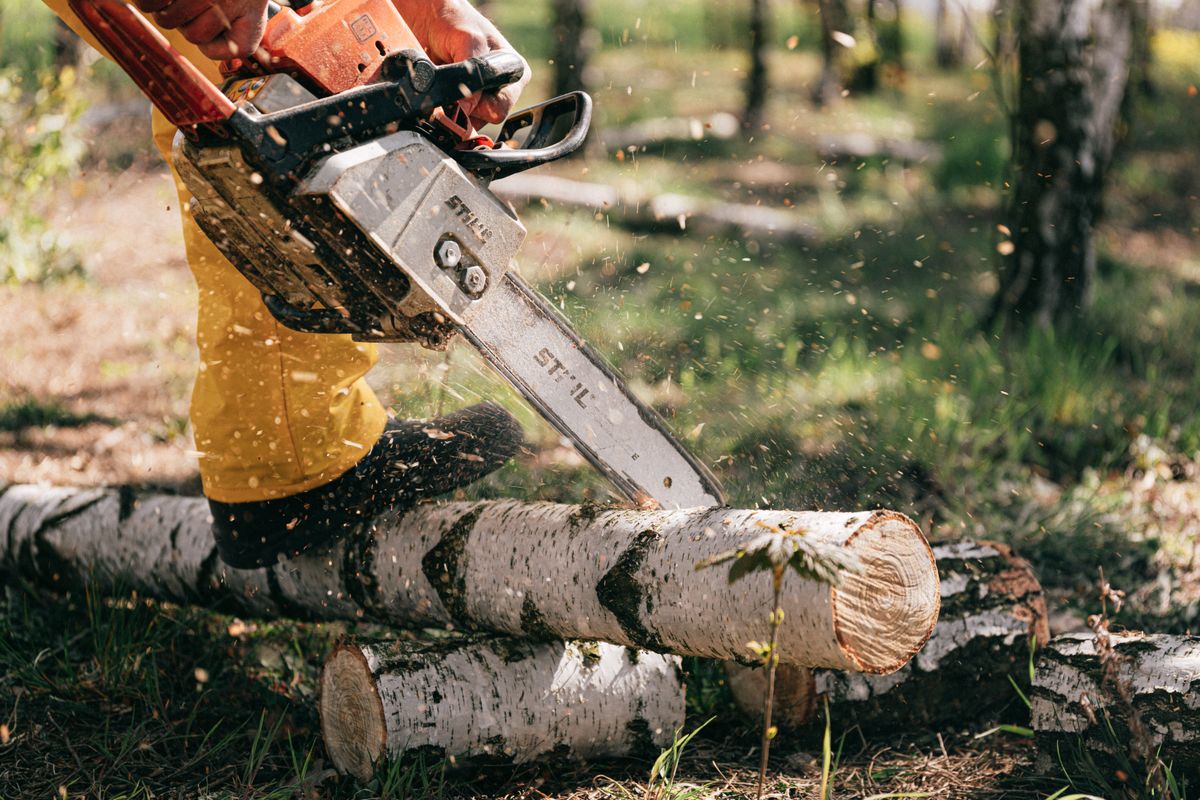
Trees on roofs, split trunks, blocked driveways β storm response across Broward County.
Emergency tree service in Miramar, FL means a hazard that cannot wait: a tree on your roof, a limb hanging over the driveway, a trunk split after a storm, or a fallen tree blocking the only way out. We are licensed and insured for Broward County tree work, we rig damaged trees apart in pieces rather than dropping them onto whatever is underneath, and we document everything with photos and itemized invoices for your insurance claim. Call (954) 740-6174 and tell us what the tree is on.
Updated August 2026
A tree down on your roof, a limb hanging over a driveway, a trunk split after a storm, a tree leaning that wasn't leaning yesterday, or anything blocking access to a house. If it's a hazard right now rather than a project for next month, it's an emergency call.
When you reach us, we want to know three things: where the tree is, what it's on or threatening, and whether anyone is in the affected part of the house. That determines whether we're heading out immediately or scheduling you into the next available window.
During and immediately after a named storm, Broward gets overwhelmed and every crew in the county is triaging. We work genuine hazards first β trees on structures and blocked egress β before yard cleanup. That's the honest picture rather than promising everyone a two-hour response.
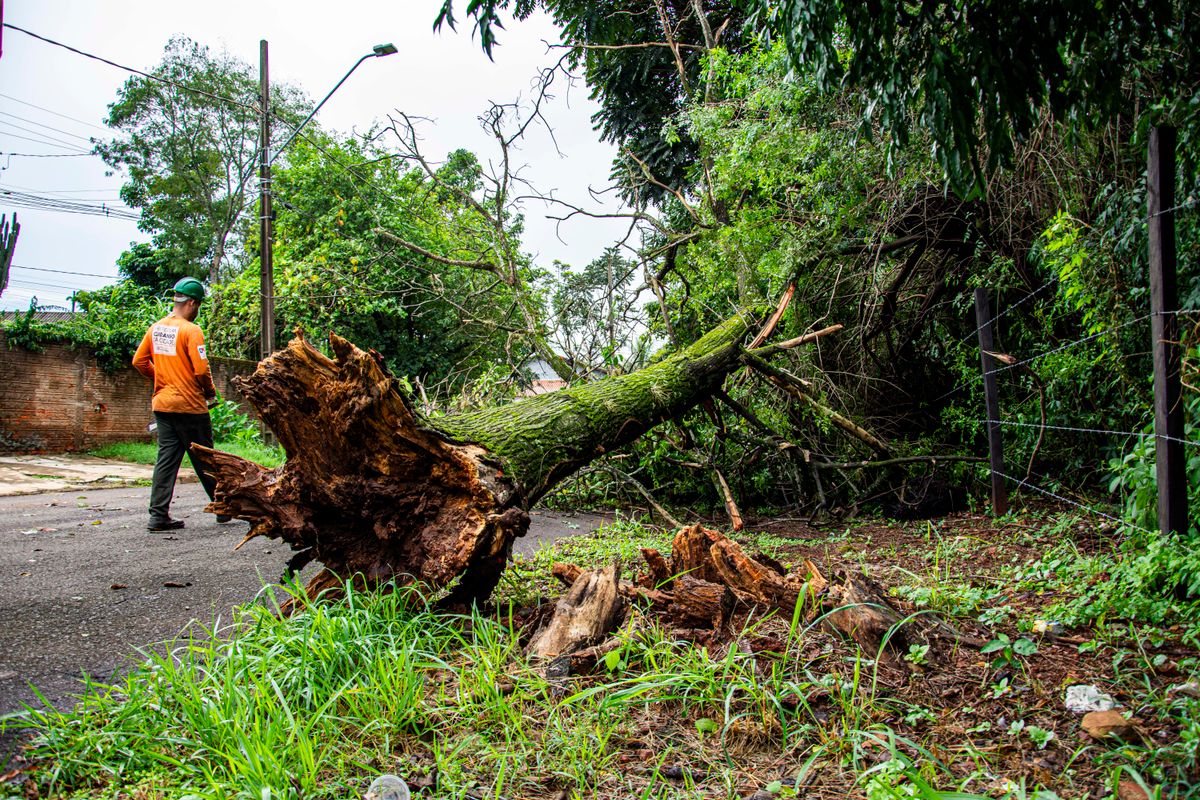
Stay away from the tree. That sounds obvious, and people ignore it constantly. A fallen tree is under load in ways that aren't visible, and limbs under tension release with real force when something shifts.
If any part of the tree is touching a power line, treat every line as live and call FPL before you call us. We do not work trees in contact with energized lines, and no legitimate company in Broward will. That's a utility job first.
Photograph everything before anything moves, from several angles, including damage to the structure. Insurers ask for it, and once a crew has cut the tree apart the evidence is gone. Then move vehicles clear of the work area and unlock gates if you can do it safely.
If the tree hit the house, get everyone out of that part of the building. Roof and ceiling damage isn't always obvious from underneath.
Hurricane season runs June through November, and the same failures repeat every year.
Saturated soil plus sustained wind pulls the whole root plate out. Common with shallow-rooted species in the sandy, high-water-table soil across Broward.
Trees with two competing leaders split down the middle. The failure line usually runs deep into the trunk, and what's left standing is rarely salvageable.
Roof, screen enclosure, fence, or vehicle. Requires rigging the tree apart in pieces rather than felling it, so nothing shifts onto what's underneath.
Broken limbs caught in the canopy overhead. Invisible from the ground until you look up, and they come down without warning days later.
Trees across access points that keep you from leaving or emergency vehicles from reaching you. Near the top of the triage list.
Limbs on the line running from the pole to your house. Utility gets called first, always, before any cutting happens.
The general pattern in Florida homeowner policies: if a tree hits a covered structure, removal is usually covered, often up to a stated limit. If the tree simply falls in your yard and hits nothing, removal is frequently not covered at all.
That distinction catches people off guard every hurricane season. A large oak flat across the lawn can be entirely on you, while the same tree clipping a shed corner may be a claim.
We document our work with photos and provide itemized invoices written the way adjusters want to see them, which makes the claim considerably smoother. We're not insurance adjusters and won't tell you what your policy covers β but we've worked enough Broward storm claims to know what documentation tends to be asked for.
A fair amount of it, yes. The trees that fail in storms are usually the ones that were already compromised β dead wood in the crown, a dense unthinned canopy catching wind like a sail, included bark in a weak fork, or root damage from nearby construction.
Structural thinning before June is the highest-value thing a Miramar homeowner can do. Opening the canopy so wind passes through rather than pushing against it dramatically reduces the load on the root plate. Removing dead wood eliminates the first thing to become airborne.
What doesn't help, and actively hurts, is the aggressive over-cutting sold as storm prep every May. Stripping a tree or hurricane-cutting a palm weakens it going into exactly the season it needs to be strongest. Real preparation is measured work done early, and it costs less in April than emergency work costs in September.
For a genuine hazard on a normal day, typically same day and often within a few hours. During and right after a named storm, all of Broward is triaging and honest answers get longer β we handle trees on structures and blocked access first, then work down to yard debris. Call and we'll tell you a real window instead of a comfortable one.
Call FPL first and stay far back. Assume every downed line is live, including lines that look harmless and lines lying in water. We do not cut trees in contact with energized conductors and neither should anyone else β the utility has to de-energize or clear it first. Once that's done, we handle the tree.
It depends on what the tree hit. Most Florida policies cover removal when a tree damages a covered structure like your house, garage, or fence, often subject to a per-tree limit. A tree that falls and hits nothing is frequently not covered. Check with your carrier, and photograph everything before any cutting starts β adjusters ask for it and once the tree is cut up the proof is gone.
Yes for true emergencies. Working a damaged tree in the dark is considerably more dangerous and we're honest about when it makes sense versus when securing the area and starting at first light is the safer call. Weekends during hurricane season are normal working days for us.
Emergency work generally runs above standard removal because of after-hours response, complex rigging, and the risk involved with a tree already under load. Expect somewhere from $800 to $3,000 or more depending on size, what the tree is resting on, and access. A tree on a roof requires piece-by-piece rigging, which takes far longer than dropping a tree in an open yard.
Depends on whether it just started leaning. A tree that has grown at an angle over years is usually fine. A tree leaning after a storm, especially with soil heaved or cracked on the opposite side, has root plate failure and is not recoverable β it needs to come down before it finishes falling. We'll look at the root flare and the soil and tell you which one you have.